
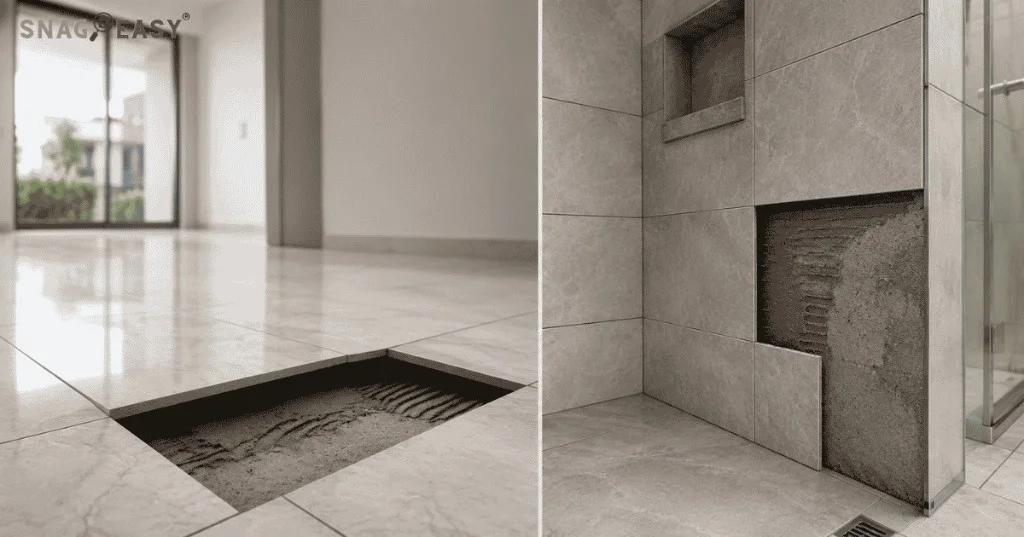
Why Tile Hollowness Is a Serious Hidden Defect in Premium Apartments & Villas
When buyers take possession of a premium apartment or luxury villa, they often focus on visible finishes—paint quality, designer fittings, modular kitchens, and premium flooring. However, one of the most expensive hidden defects often lies beneath the surface: tile hollowness.
At SnagEasy, we regularly find hollow tiles during professional home inspections in Mumbai, Pune, Bangalore, Navi Mumbai, and Thane. Surprisingly, this issue is found not only in affordable housing projects but also in luxury apartments, penthouses, and premium villas.
While hollow tiles may initially appear to be a minor workmanship issue, they can eventually lead to cracked flooring, water ingress, dampness, loose tiles, expensive repairs, and ongoing maintenance headaches.
Before investing crores in a new home, every buyer should understand why tile hollowness occurs, how it affects the property, and why professional home inspection is the best way to identify it before possession.
What Is Tile Hollowness?
Tile hollowness occurs when a tile is not properly bonded to the substrate beneath it. Instead of achieving full adhesive or mortar contact, voids or air pockets remain below the tile surface. When tapped, these tiles produce a hollow sound compared to properly fixed tiles.
The problem may exist in:
- Living room flooring
- Bedroom flooring
- Kitchen flooring
- Balcony flooring
- Utility area flooring
- Bathroom flooring
- Bathroom dado tiles
- Kitchen dado tiles
- Staircase tiles
- Terrace tiles
- Villa external cladding tiles
Many buyers cannot visually identify these defects because the tiles often appear perfectly installed.
Why Does Tile Hollowness Occur?
1. Poor Adhesive Application
One of the most common reasons is insufficient tile adhesive coverage. Instead of achieving full contact, the installer may apply adhesive unevenly, leaving empty pockets beneath the tile.
2. Improper Surface Preparation
Dust, debris, loose plaster, or an uneven base can prevent proper bonding.
3. Rushed Construction Schedules
Large residential projects often operate under strict possession deadlines. Rapid installation can sometimes result in inadequate curing time and improper tile fixing practices.
4. Incorrect Mortar Mix
Improper mortar consistency affects bonding strength and creates future hollowness.
5. Large Format Tiles
Modern premium homes increasingly use large-format tiles. These tiles require higher installation precision. Even small installation mistakes can create large hollow pockets.
6. Structural Movement & Shrinkage
Over time, minor structural movement and shrinkage can weaken tile bonding.
Why Hollow Flooring Tiles Are Dangerous
Many homebuyers ignore hollow tiles because they appear harmless. Unfortunately, the consequences become visible months or years later.
Cracked Tiles
Repeated foot traffic creates stress concentration. Eventually the tile develops cracks.
Loose Tiles
As bonding weakens, tiles begin moving under load.
Tile Pop-Up Failure
Entire tile sections may detach unexpectedly.
Water Penetration
Cleaning water and moisture can enter through joints and gaps.
Expensive Future Repairs
Once furniture, wardrobes, modular kitchens, and interiors are installed, tile replacement becomes extremely expensive. A defect that could have been rectified by the builder before possession can cost homeowners tens of thousands of rupees later.
Why Bathroom Dado Tile Hollowness Is Even More Critical
Among all tile-related defects, bathroom dado tile hollowness is one of the most serious. Bathroom walls are continuously exposed to shower water, humidity, steam, cleaning chemicals, and moisture migration.
When dado tiles are hollow:
Water Travels Behind Tiles
Water can enter microscopic grout gaps and accumulate behind tiles.
Dampness Appears on Adjacent Walls
One of the most common findings during professional home inspections is dampness appearing on bedroom or living room walls adjacent to bathrooms.
Paint Damage
The first visible signs include bubbling paint, peeling paint, surface staining, salt deposits (efflorescence), and mould growth.
Tile Detachment Risk
In severe cases, bathroom wall tiles may detach and fall—creating both safety and maintenance concerns.
How Tile Hollowness Creates Hidden Dampness
Many homeowners are surprised when damp patches appear months after possession. The actual root cause may not be waterproofing failure. Instead, the issue may originate from hollow bathroom wall tiles.
Typical sequence:
- Hollow cavity exists behind tile.
- Water enters through grout joints.
- Moisture accumulates behind tiles.
- Water migrates into adjacent walls.
- Dampness becomes visible.
- Paint starts peeling.
- Homeowner spends money investigating the issue.
This process can continue for months before the true cause is discovered.
How SnagEasy Identifies Hollow Tiles During Home Inspection
Professional tile inspection is much more than simply looking at the floor. Our inspectors systematically evaluate flooring and wall tiling across the entire property.
Tap Testing
Every tile section is inspected using specialized tapping techniques. Sound variations immediately reveal hollow zones.
Pattern Mapping
Affected areas are mapped and documented.
Photo Documentation
Every defect is photographed and categorized.
Severity Classification
Issues are classified as High Severity, Medium Severity, or Low Severity.
Room-Wise Reporting
Defects are documented room by room for easy builder rectification.
Learn more about our comprehensive inspection process:
Why Builders Should Rectify Hollow Tiles Before Possession
The best time to replace hollow tiles is before handover.
For Buyers
- No repair cost
- No inconvenience
- No interior damage
- Better long-term durability
For Developers
- Better customer satisfaction
- Reduced future complaints
- Fewer warranty claims
- Stronger brand reputation
Real Cost Impact of Ignoring Hollow Tiles
A typical rectification may involve: tile removal, surface preparation, waterproofing repairs, re-tiling, grouting, and repainting adjacent walls.
Depending on severity, costs can range from ₹20,000 to well over ₹1,00,000 after possession. In premium villas and luxury apartments, costs can be significantly higher due to imported or designer tiles.
Why Home Inspection Is Essential Before Possession
Tile hollowness is rarely visible during a casual walkthrough. Most buyers simply do not have the tools, experience, or technical knowledge to identify it.
A professional home inspection helps uncover:
- Hollow flooring tiles
- Hollow bathroom dado tiles
- Dampness risks
- Leakage-prone areas
- Plumbing defects
- Electrical issues
- Finishing defects
- Window and door defects
Explore our city-specific services:
Final Thoughts
Tile hollowness may look like a minor construction defect, but its long-term consequences can be severe. From cracked flooring and loose tiles to hidden dampness, mould growth, and expensive repairs, this single defect can create years of frustration for homeowners.
The good news is that hollow tiles are completely identifiable before possession through a professional home inspection.
At SnagEasy, our engineering-led inspection process helps buyers detect hidden defects before they become expensive problems. Whether you are purchasing a luxury villa, premium apartment, or your first home, a professional inspection ensures that your investment is protected from day one.
Related Resources
- Home Inspection Checklist
- Common Hidden Defects During Home Inspection
- Professional Inspection Demo
- Book Inspection
A home inspection doesn't cost money—it saves money, protects your investment, and helps ensure a truly defect-free possession.